VA Construction Loans: One Closing Covers the Land, the Build, and the Permanent Mortgage
8 min read · Last updated October 8, 2026
- A VA construction loan uses a one-time-close structure, combining the land, the build, and the permanent mortgage into a single closing instead of two separate loans.
- VA eliminated its builder identification number requirement for new construction loans effective March 31, 2025 (VA Circular 26-25-1); a builder now only needs to meet state or local licensing.
- Construction loans use the same VA funding fee schedule as a standard purchase loan: 2.15% for a first-time use below 5% down, dropping to 1.25% at 10% or more down.
- A veteran with full VA entitlement has no VA-imposed loan limit on a construction project. The real ceiling is what the lender approves and what the appraisal supports.
A VA construction loan lets a veteran finance the land, the build, and the permanent mortgage in one closing, instead of taking out a separate loan for each stage. The harder part is finding one of the relatively small number of VA-approved lenders that will actually fund the construction phase itself, not just the finished house.
In this article
- What a VA construction loan is
- Who qualifies for a VA construction loan
- What the loan covers from groundbreaking to the final walkthrough
- How to apply and find a lender who funds construction
- What causes delays or denials
- Frequently asked questions
A VA construction loan combines land, construction draws, and the permanent mortgage into one one-time-close loan, using the same entitlement and funding-fee rules as a standard VA purchase, with the main obstacle being that only a limited number of VA-approved lenders fund the construction phase at all.
What a VA construction loan is
VA does not market a separate product called a “construction loan” on its own site. Its home loan types page describes a VA direct loan plus three VA-backed loans that exist “to help you buy, build, or improve a home or refinance your current home loan.” Building a home from the ground up falls under the VA-backed purchase loan category, the same one that covers buying an existing house.
In practice, lenders who offer this structure call it a one-time-close construction loan. One closing covers the construction phase and the permanent mortgage together, and the loan automatically converts to a standard VA mortgage once the house is finished.
This is different from a two-time-close structure, where a veteran takes out a separate construction loan first, then applies for a second, permanent VA loan once the home is done. A one-time-close loan skips that second application, second set of closing costs, and the risk of not qualifying the same way twice.
Who qualifies for a VA construction loan
Eligibility for the loan itself does not change. You still need a Certificate of Eligibility (COE) tied to your service era and discharge status, the same document that qualifies you for any VA-backed purchase. Nothing about building versus buying changes who VA considers eligible.
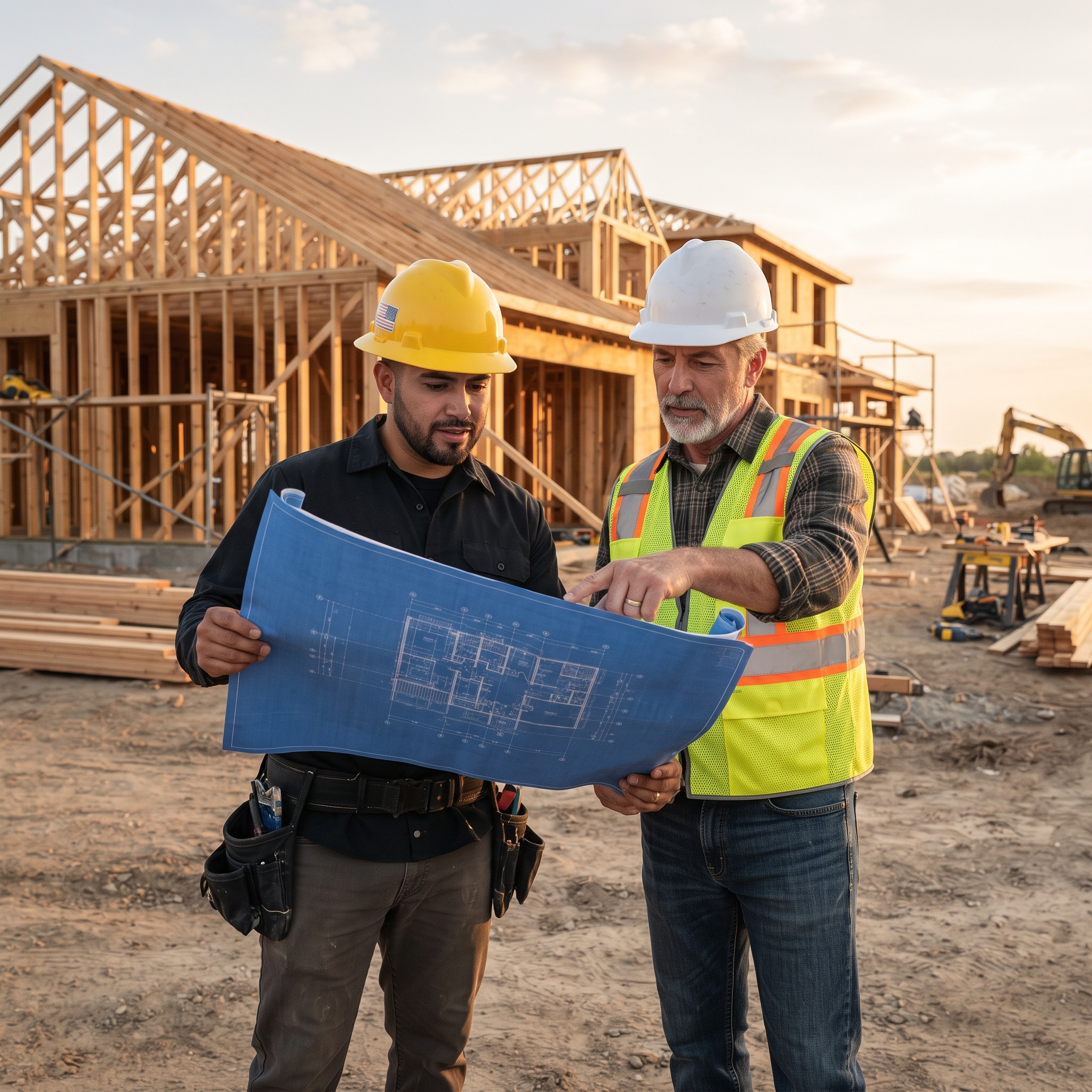
What’s new is the builder side. VA Circular 26-25-1, effective March 31, 2025, eliminated the requirement that a builder obtain a VA-issued builder identification number before VA would issue a Notice of Value on new or proposed construction.
The circular states plainly that builders “are still expected to meet any state and/or local licensing requirements,” but the separate VA-specific registration step is gone for a standard construction loan. Two programs are the exception: a Specially Adapted Housing grant and a Native American Direct Loan still require the VA-issued builder number.
What the loan covers from groundbreaking to the final walkthrough
The loan funds three things in sequence: acquiring or paying off the land, the construction costs released to the builder as work is completed, and the permanent mortgage that takes over once the house is done. Funds for the build release in stages called draws, tied to a schedule your lender sets against your builder’s contract and approved plans, not released all at once.
One detail surprises a lot of veterans: VA itself stopped performing its own compliance inspections on new construction back in February 2006. The same 2025 circular notes this change explicitly as background for why the builder-ID process was being streamlined. VA now relies on local building-code inspections plus the builder’s own 1-year or 10-year warranty, rather than sending a VA inspector to the site.
The funding fee follows the exact same schedule as a standard VA purchase. VA groups them together as “VA-backed purchase and construction loans” under one rate table, in effect since April 7, 2023:
| Down payment | First use | After first use |
|---|---|---|
| Less than 5% | 2.15% | 3.30% |
| 5% or more | 1.50% | 1.50% |
| 10% or more | 1.25% | 1.25% |
That math plays out concretely for Diego Fuentes, a veteran using his VA loan benefit for the first time with full entitlement, who is building a $380,000 home, land and construction combined, with no money down. His loan amount is $380,000.
VA’s funding fee for a first-time use with less than 5% down is 2.15% of that amount, which comes to $8,170. Rolled into the loan under VA’s own closing-cost rules, his total amount financed is $388,170.
Diego’s full entitlement matters here too. VA’s own loan limits page states that with full entitlement, “you don’t have a loan limit,” as long as he can afford the payment and the appraisal supports the cost to build. If Diego instead had partial entitlement left over from an earlier VA loan, his lender would need his remaining entitlement plus any down payment to cover at least 25% of the loan amount, the same rule that applies on a standard purchase.
How to apply and find a lender who funds construction
Start with your COE, the same one you’d pull for any VA loan. From there, the real work is finding a lender who offers true construction-to-permanent financing, not just the end loan after someone else has already built the house. Many VA-approved lenders only finance a finished home; relatively few will carry the risk of an unfinished structure as collateral through months of draws.
Once you’ve found a participating lender, you’ll submit a complete, approved set of construction plans and a licensed builder’s contract. Your lender orders an appraisal based on those plans, not on a finished comparable home, and the loan amount is set against the lower of that appraised value or the total cost to build. Diego’s lender, for example, required his builder’s state license number and a fixed-price contract before scheduling the appraisal.
What causes delays or denials
Two mistakes account for most of the trouble veterans run into. The first is assuming any VA-approved lender handles construction loans; most don’t, and discovering that after signing a contract on land costs real time.
The second is working with a builder who isn’t properly licensed in your state. VA no longer tracks builders through its own ID system, but your lender still has to verify state and local licensing before closing, and an unlicensed builder stops the loan cold.
A cost overrun mid-build causes the same kind of delay. Your draw schedule is tied to the approved budget, not an open-ended one, so a change order that pushes costs higher has to be re-approved before the next draw releases. Veterans who treat the approved budget as a ceiling, not a starting point, get through the build with fewer surprises.
Frequently asked questions
Do I need a special Certificate of Eligibility for a VA construction loan?
No. The same Certificate of Eligibility (COE) that qualifies you for any VA-backed loan applies here, tied to your service era and discharge status, not to whether you’re buying or building. Request your COE through VA.gov, or let a VA-approved lender pull it for you before you start shopping for land or a builder.
Does my builder have to be VA-approved?
Your builder does not need a VA-issued builder identification number for a standard construction loan. VA eliminated that requirement for new construction in March 2025. Your builder still has to carry whatever state or local license your area requires, and your lender may add its own approval steps on top of VA’s rules.
Can I buy land now and build on it later with this loan?
VA will not finance land purchased on its own unless construction starts immediately afterward. If you want to hold land for a future build, you’ll need a separate land loan or a cash purchase first, then roll it into a VA construction loan once you’re ready to break ground with approved plans in hand.
What happens if construction costs run over the approved budget?
Your lender approved a fixed draw schedule tied to your builder’s contract and plans, not an open-ended budget. A cost overrun means you cover the difference out of pocket, or get the increase re-approved before the next draw releases. This is one of the most common reasons a construction project stalls partway through.
Can I use a VA construction loan with only partial entitlement?
Yes, but your lender will size the loan against your remaining entitlement instead of leaving it uncapped. Without full entitlement, most lenders want your entitlement plus any down payment to cover at least 25% of the total loan amount, the same rule that governs a standard VA purchase loan.