The Veterans Affairs Benefit You Can Qualify For Without Ever Being Housebound
5 min read · Last updated August 22, 2026
- Housebound pays more than base Improved Pension but less than Aid and Attendance, and the Department of Veterans Affairs (VA) pays whichever single rate is higher, never both together.
- For 2026, a veteran with no dependents gets $17,441 a year in base pension, $21,313 with Housebound added, a difference of $3,872 a year.
- You can qualify for Housebound through actual confinement to your home, or through a second, separate disability rated 60% or more, without ever being confined at all.
- The application uses VA Form 21-2680, the same form used for Aid and Attendance, and a medical examiner has to complete part of it.
In this article
- What Housebound is and how it differs from Aid and Attendance
- Current 2026 rates
- Who qualifies
- How to apply
- What can slow down or block a claim
- Frequently asked questions
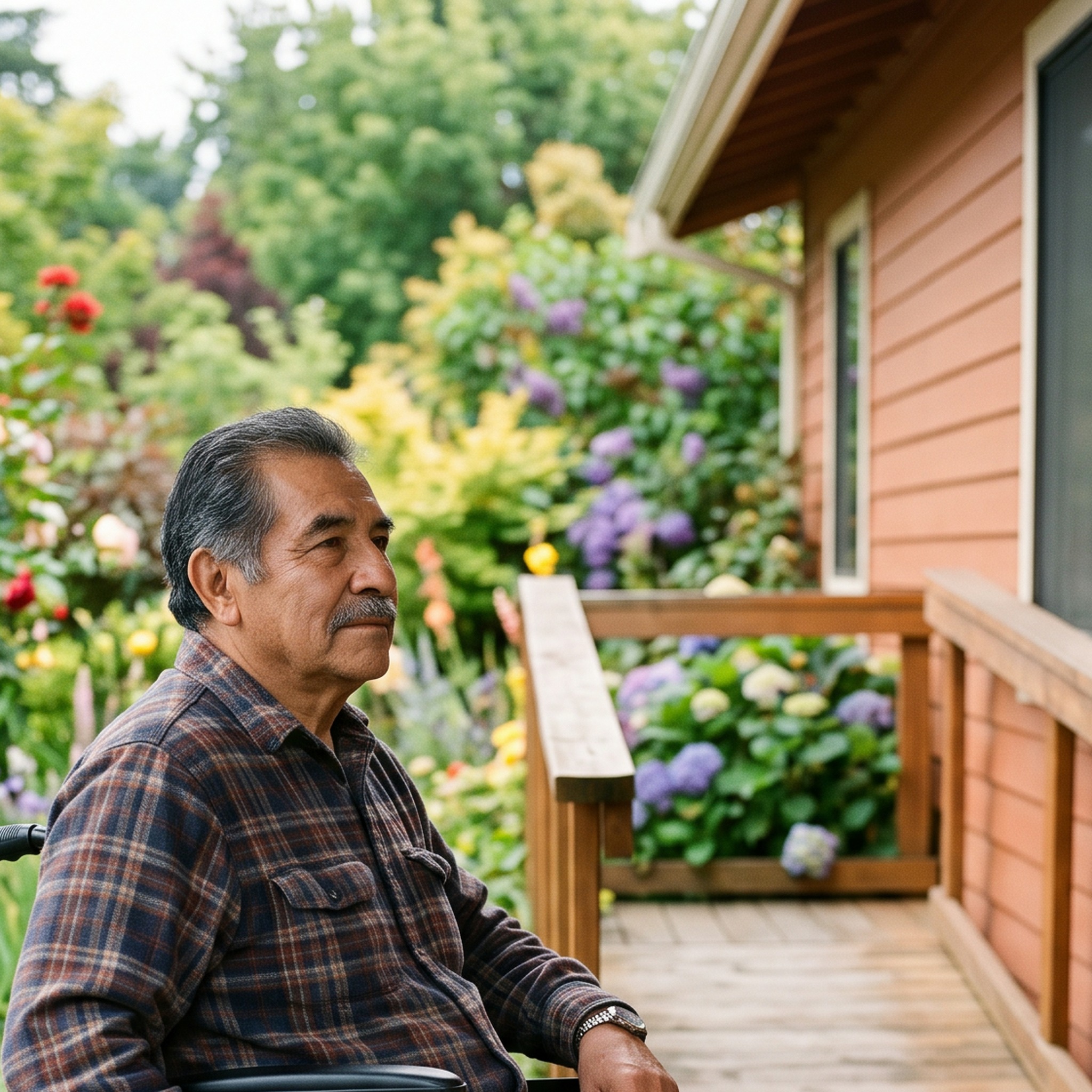
Harold Reyes, a 71-year-old veteran with a single service-connected disability rated 100% and a second, unrelated disability rated 70%, assumed he did not qualify for any pension add-on because he still drives himself to appointments and does not need help dressing or bathing. He qualifies for the Housebound benefit anyway, because Housebound has a path that does not require confinement at all.
What Housebound is and how it differs from Aid and Attendance
Housebound and Aid and Attendance are both add-ons to VA’s Improved Pension program, and VA’s own language draws a clear line between them. Aid and Attendance is built around functional need, whether a veteran needs help with daily activities like bathing, dressing, or is bedridden or in a nursing home. Housebound is built around a permanent disability that keeps a veteran substantially confined to the home, or, separately, around the combined severity of two disability ratings.
The regulation behind Housebound, 38 Code of Federal Regulations (CFR) § 3.351, sets out two distinct paths, and a veteran only needs to satisfy one. The first path requires a single permanent disability rated 100% plus a second, separate disability or disabilities independently rated 60% or more, affecting a different part of the body. The second path requires a single disability rated 100% and being substantially confined to the home and its immediate premises, with that confinement reasonably certain to last for life. Notice that the first path does not mention confinement at all.
Current 2026 rates
VA publishes current pension rate tables each year, adjusted for the annual cost-of-living increase.
| Household | Base Improved Pension | With Housebound | With Aid and Attendance |
|---|---|---|---|
| Veteran, no dependents | $17,441 | $21,313 | $29,093 |
| Veteran, 1 dependent | $22,839 | $26,710 | $34,488 |
| Surviving spouse, no dependent child | $11,699 | $14,298 | $18,697 |
For a veteran with no dependents, base Improved Pension pays $17,441 a year. Adding Housebound raises that to $21,313, a difference of $3,872 a year, or roughly $322 a month. Aid and Attendance pays more than either, $29,093 a year for that same veteran, which is why VA does not let a veteran collect both Housebound and Aid and Attendance at the same time. VA pays the single higher rate that applies, not a combination.
Base pension eligibility still applies underneath either add-on: a wartime service record, no dishonorable discharge, and net worth under the current limit of $163,699 for this same period.
Who qualifies
To qualify through the confinement path, a veteran needs a single permanent disability rated 100% and needs to be substantially confined to the home and its immediate premises, with that confinement expected to last for life, not a temporary recovery period. To qualify through the combined-rating path, a veteran needs that same 100% rating on one disability plus an entirely separate disability, involving a different part of the body, independently rated 60% or higher. Either path is sufficient on its own, and a veteran does not have to pursue both at the same time.
The underlying Improved Pension eligibility has to hold regardless of which Housebound path applies: a period of wartime service, an honorable discharge, and a household net worth under VA’s current limit. Housebound and Aid and Attendance are both add-ons layered on top of that base pension, not stand-alone benefits a veteran can claim without first meeting the pension rules.
How to apply
Housebound and Aid and Attendance share the same application form, VA Form 21-2680, titled for examination of Housebound status or the need for regular aid and attendance. A medical examiner has to complete the clinical portion of the form, documenting either the confinement or the combined disability picture. Applications can be filed online, mailed to VA’s Pension Intake Center in Janesville, Wisconsin, or filed in person at a regional office. A veteran claiming based on nursing home status also needs a second form.
Bring your existing VA rating decisions to the exam appointment rather than relying on the examiner to look them up. A veteran pursuing the combined-rating path in particular should confirm both disability ratings are current and correctly documented before the appointment, since the examiner is verifying the medical picture, not researching your VA file from scratch. A claim that arrives with the ratings already clearly laid out for the examiner tends to move faster than one that leaves that work for VA to sort out afterward.
What can slow down or block a claim
The most common reason a Housebound claim runs into trouble is trying to qualify through the confinement path without the medical documentation to back up that the confinement is permanent, not a temporary recovery from surgery or an acute illness. Net worth above the $163,699 limit for this period will also block the underlying pension eligibility that Housebound sits on top of. An incomplete Form 21-2680, particularly a missing or vague medical exam section, is a routine cause of delay rather than an outright denial, since VA typically requests the missing information rather than closing the claim outright.
Frequently asked questions
Can I get both Housebound and Aid and Attendance at the same time? No. VA pays whichever single rate is higher and does not stack the two together. Aid and Attendance pays more than Housebound at every dependent tier, so it takes priority when a veteran qualifies for both.
Do I have to actually be confined to my house to qualify for Housebound? Not necessarily. One path requires substantial, permanent confinement, but a second path only requires a single disability rated 100% plus a separate disability rated 60% or higher. A veteran can qualify through that combined-rating math without ever being confined at all.
How much more does Housebound pay compared to base pension in 2026? For a veteran with no dependents, base pension pays $17,441 a year and Housebound raises it to $21,313, a difference of $3,872 a year for the period running December 2025 through November 2026.
What form do I use to apply for Housebound? VA Form 21-2680, the same form used for Aid and Attendance claims. A medical examiner has to complete part of the form documenting either your confinement or your combined disability ratings.
Does my net worth affect Housebound eligibility? Yes. Housebound is an add-on to Improved Pension, so the underlying pension net worth limit still applies, currently $163,699 for the period running through November 2026. Net worth above that limit blocks the base pension eligibility Housebound depends on.