
The Appraiser Found Peeling Paint and a $10,500 Value Gap on Her 1968 Ranch. Two VA Tools Fixed Both Before Closing.
9 min read · Last updated September 10, 2026
- Minimum Property Requirements (MPRs) are the U.S. Department of Veterans Affairs (VA)’s safety and habitability standards for a house, separate from its market value – a home can be perfectly priced and still fail one.
- The Tidewater Initiative gives the point of contact just 2 business days to submit new comparable sales before the appraiser finalizes the Notice of Value (NOV) – not the 48 hours you’ll see repeated elsewhere.
- Once a low NOV is already issued, only the veteran borrower can file a Reconsideration of Value (ROV), submitted directly to VA, not through the lender or the original appraiser.
- A June 2026 VA update relaxed some MPR line items (the full radon gas testing requirement was removed), streamlined guidance on detached improvements, and revised (not dropped) the standards for homes built before and after 1978.
A VA appraisal can fail a house a conventional loan would sail through because MPRs screen for safety and habitability, not market value, and the fix depends on timing: the Tidewater Initiative lets your team submit comparable sales within 2 business days, before the appraiser finalizes the number, while a Reconsideration of Value is the veteran borrower’s own appeal to VA after a low NOV is already on record.
In this article
- What VA’s Minimum Property Requirements actually check
- The specific things that fail an MPR on a house that’s otherwise fine
- Tidewater: the 2 business days that happen before the number is official
- Reconsideration of Value: your move after a low NOV is already on paper
- How to use both without losing your window
- Frequently asked questions
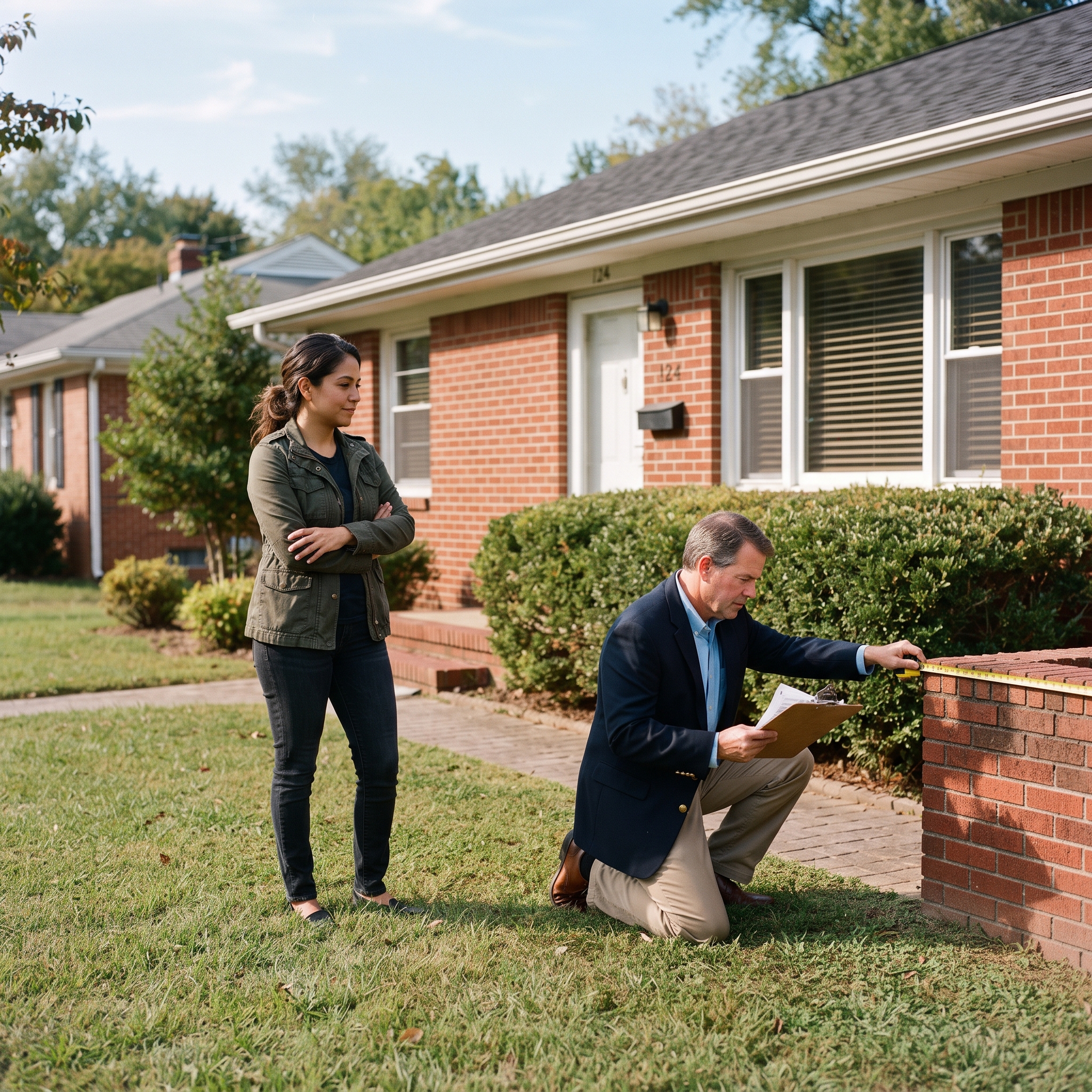
Elena Reyes, a 34-year-old Army veteran, had a signed contract on a 1968-built brick ranch in Dayton, Ohio for $238,000 when the VA appraiser called her loan officer with two problems in the same visit. First, the exterior window trim was peeling down to bare wood – an automatic Minimum Property Requirement issue on a house built before 1978. Second, the appraiser’s own research was trending toward a value of $227,500, a full $10,500 under the contract price.
What VA’s Minimum Property Requirements actually check
MPRs are the standards a property has to meet before VA will guarantee a loan on it, and they exist to confirm the house is safe, sound, and sanitary – not to confirm it’s worth what the buyer agreed to pay. That distinction matters because a home inspection and a VA appraisal are not the same event: the appraiser is required to note MPR problems whether or not the buyer ever hired an inspector. VA updated these requirements as of a June 2026 revision, cutting some long-standing items to speed up delivery – removing the full radon gas testing requirement and streamlining guidance on how detached improvements are evaluated – while other topics, including the standards for both pre-1978 and post-1978 properties, were revised rather than dropped (VA News, June 25, 2026).
The specific things that fail an MPR on a house that’s otherwise fine
A house doesn’t need to be falling down to trip an MPR. VA’s Lender’s Handbook (VA Pamphlet 26-7) sets the livability standards appraisers check on every VA loan, and the recurring failures on structurally sound homes include peeling, chipping, or flaking exterior paint on anything built before 1978 (the pre-1978 standard the June 2026 update specifically revised, cited above); no permanent heat source capable of keeping the home livable; a roof without enough remaining service life or with active leaks; a private well or septic system that can’t be confirmed safe and adequate; and exposed or unsafe electrical wiring. None of these say anything about what the house is worth. They say whether VA will guarantee a loan on it until the seller or buyer fixes them.
Tidewater: the 2 business days that happen before the number is official
Tidewater is the one stage where new sales data is easy to get in, because it happens before the appraiser ever finalizes a value. The process traces back to a 2003 pilot limited to the Chesapeake, Norfolk, Portsmouth, and Virginia Beach area of Virginia – which is where the name comes from – after VA found that giving lenders and agents a short window to supply missing market data cut down on formal appeals later (VA Circular 26-03-11). If the appraiser’s research is trending below the sales price, they’re required to contact the point of contact named on the appraisal request – typically the loan officer or real estate agent – before finishing the report. That contact then has exactly 2 business days to submit additional comparable sales, each with the street address, sales price, date of sale, and square footage, for the appraiser to weigh (VA Fee Appraiser Training: Tidewater and Reconsideration of Value). If nothing comes in during that window, the appraiser finishes the report anyway and simply notes that Tidewater ran with no response – there’s no penalty, just no second chance until the NOV is already issued.
Elena’s agent used the window. Within a day, she submitted three recent closed sales the appraiser hadn’t pulled, all within half a mile and comparable square footage. The final NOV came back at $235,000 – the gap had closed from $10,500 to $3,000, but it wasn’t fully gone.
Reconsideration of Value: your move after a low NOV is already on paper

Once the NOV is issued, Tidewater is no longer available – what’s left is a Reconsideration of Value. Here the mechanic surprises a lot of buyers: the request has to come from the veteran borrower directly to VA, submitted through VA’s own online case system, not routed through the lender or handed back to the original appraiser to reconsider on their own (VA Fee Appraiser Training: Tidewater and Reconsideration of Value).
In practice, a loan officer or agent usually helps assemble the comparable sales and any factual corrections, but the submission itself is the veteran’s. VA reviews the original appraisal, whatever new market data the veteran submits, and any additional data VA has on hand; if VA agrees a change is warranted, it issues an amended NOV. The appraiser’s role at this stage is limited to answering VA’s own questions, and VA holds them to a next-business-day turnaround on any clarification it requests – so once VA engages with a case, it tends to move quickly rather than sit for weeks.
Elena requested the ROV herself, attaching one more closed sale her agent had found after the fact – a nearly identical floor plan two streets over that had sold nine days earlier and had never made it into either appraiser’s data set. VA agreed it was a better match than one of the original comparables, and the amended NOV came back at $238,000, matching the contract price exactly. Separately, the seller agreed to scrape and repaint the peeling trim before closing, clearing the MPR issue for about $650 – a repair negotiation that had nothing to do with the appraisal fight and didn’t need to wait on it.
| Factor | Tidewater Initiative | Reconsideration of Value (ROV) |
|---|---|---|
| When it happens | Before the appraiser finalizes the report and the Notice of Value is issued | After a Notice of Value has already been issued |
| Who can act | The point of contact named on the appraisal request – usually the loan officer or agent | Only the veteran borrower can submit the request |
| Where it’s submitted | Directly to the assigned VA fee appraiser | Directly to VA, not to the appraiser or the lender |
| Deadline to act | 2 business days from the appraiser’s notice | No fixed borrower deadline, but VA holds the appraiser to a next-business-day response once a case is opened |
| What gets submitted | New comparable sales with address, price, sale date, and square footage | New comparable sales and any market data the original appraisal didn’t use |
| Best for | Catching a low value before it’s ever official | Appealing a value that’s already on record |
How to use both without losing your window
The single most common way veterans lose the Tidewater window is a stale or missing point of contact on the appraisal request – if the appraiser can’t reach anyone in 2 business days, the window closes with no reminder. Confirm your loan officer’s and agent’s contact information is correct on the request before the appraiser’s site visit, not after. If you’re already past that stage and staring at a low NOV, don’t wait for your lender to act on your behalf – the ROV has to come from you, so start gathering your own comparable sales the day the number comes in rather than the day someone tells you the process exists. Before any of that, make sure your loan eligibility is squared away: you’ll need a valid Certificate of Eligibility (COE) on file before an appraisal is ever ordered. And keep the appraisal fight separate from your closing-cost math – the VA funding fee and any MPR repair costs are negotiated on their own track and shouldn’t get tangled up with a value dispute that has its own deadlines.
Frequently asked questions
Do I have to personally fix every MPR issue before closing? No. VA requires the issue to be resolved before the loan closes, but who pays and who does the work is negotiated between buyer and seller like any other repair. A seller commonly agrees to fix a paint or heating issue rather than lose the sale, but VA itself doesn’t assign that cost to either party.
Can my real estate agent request Tidewater for me? Your agent or loan officer can be listed as the point of contact and can submit the comparable sales during the window, but Tidewater itself is triggered by the appraiser noticing a low trending value – it isn’t something you request in advance.
What happens if I have no new comparable sales to submit during Tidewater? The appraiser simply finishes the report and notes that Tidewater was offered with no response. There’s no penalty beyond the original number standing – you can still pursue a Reconsideration of Value later if the Notice of Value comes in low.
Can my lender file a Reconsideration of Value on my behalf? No. Current VA process requires the request to come from the veteran borrower directly. A lender or agent typically helps assemble the comparable sales and paperwork, but the submission to VA has to be yours.
Does a Reconsideration of Value guarantee a higher value? No. VA reviews the original report against your new evidence and issues an amended Notice of Value only if it agrees a change is warranted. Weak or duplicate comparable sales, or evidence that doesn’t clearly outweigh what the appraiser already used, can leave the original number in place.